
NSF NCAR Explorer Series: A Total Eclipse of the Sun
Thursday, Apr. 23 · 7 pm - 9 pm Longmont Museum 400 Quail Rd., Longmont, CO 80501
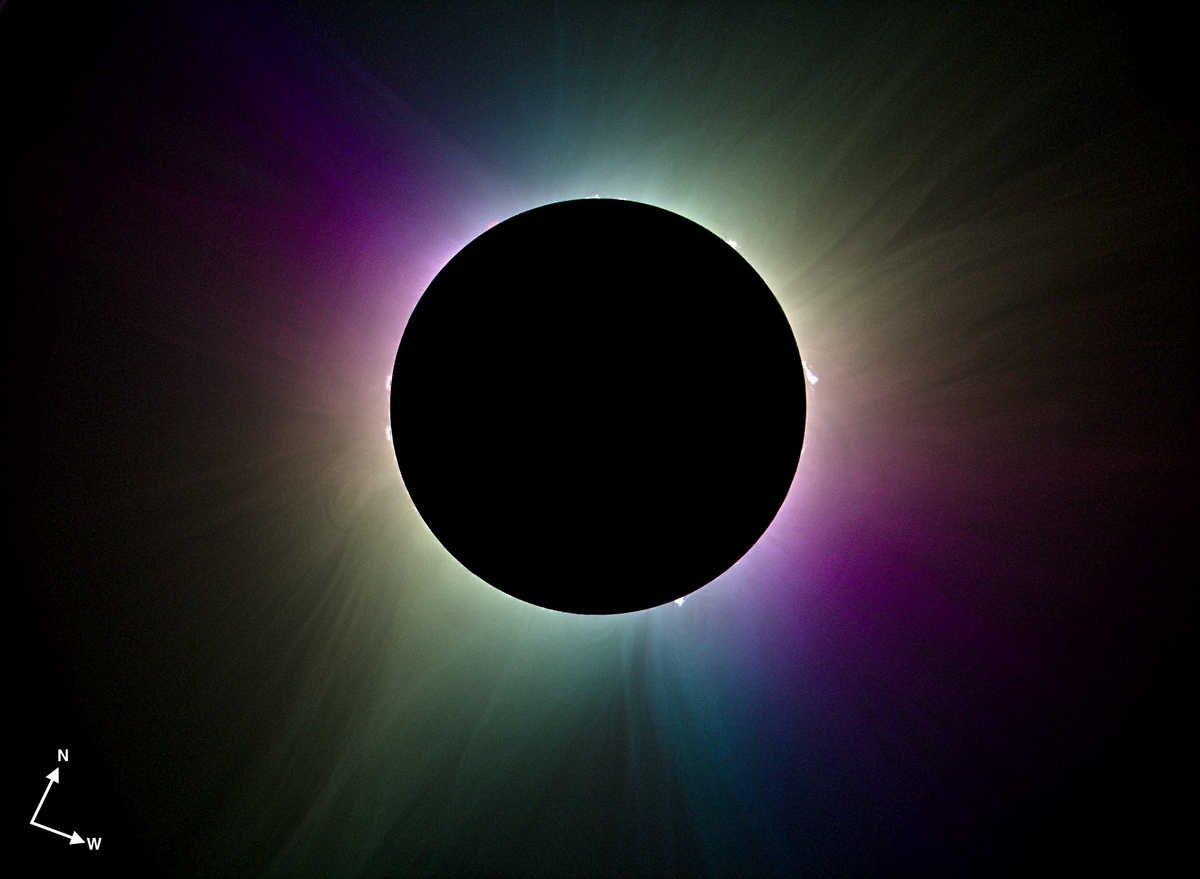
Film and panel discussion with NSF NCAR scientists Paul Bryans and Sarah Kovac, Amir Caspi, Southwest Research Institute, and NSF NCAR educator Daniel Zietlow.
Join us for a documentary film on the Citizen CATE 2024 mission, which united communities across the U.S. to capture more than 47,000 images of our Sun’s outer atmosphere during a total solar eclipse, followed by conversation.
 Dr. Amir Caspi is a Principal Scientist at the Southwest Research Institute in Boulder. He studies the Sun and its million-degree outermost atmosphere, the solar corona. He develops instruments and missions to measure solar emissions ranging from X-rays to visible light and infrared to study powerful energetic processes like solar flares and eruptions and how they affect the Earth and assets in space. Dr. Caspi is the Principal Investigator of the CubIXSS CubeSat and a mission team member of multiple other NASA solar space missions. In addition to the Citizen CATE 2024 mission, he also led the 2017 and 2024 missions to observe those total solar eclipses with NASA’s WB-57 high-altitude aircraft and has done extensive public engagement and outreach relating to solar eclipses and the Sun in general.
 Dr. Sarah Kovac is a scientist at Southwest Research Institute, where she studies the impacts of the Sun’s expansive solar wind across the inner heliosphere. After participating in CATE 2017, she continued a career in solar physics, becoming the Project Manager for CATE 2024, responsible for overseeing both the science and the engagement teams. Outside of eclipses, she uses solar wind models to describe Venusian auroral emission, and is part of the Science Operations Committee on the NASA PUNCH mission.
 Dr. Paul Bryans is a Scientist at the High Altitude Observatory of the National Center for Atmospheric Research, where he researches the ways the Sun affects life on Earth. To do this he uses observations from many different telescopes, both on the ground and in space, which each give unique perspectives on how the Sun’s atmosphere is evolving. Dr. Bryans has been involved with field expeditions to observe solar eclipses since 2017, including leading a team to a mountaintop in Chile. In addition to solar research, Paul has also conducted research in the fields of supernova remnants, molecular clouds, and comets.
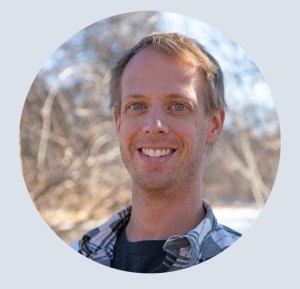 Dr. Daniel Zietlow is an educator with the NSF NCAR Education, Engagement & Early-Career Development team where he focuses on film production and informal engagement. He holds a Ph.D. in geophysics from the University of Colorado Boulder and A.B.s in physics and art history from Rollins College. While at Rollins, Dan developed a love of science, art, travel, and the outdoors. Dan spent three summers as an undergraduate research assistant, combining high-speed photography and lasers to study the vibrations of musical instruments. After graduating, Dan entered a doctoral program at the University of Colorado, where he specialized in seismology. His work took him across the globe to New Zealand, Nepal, South Africa, and even to a research vessel in the Pacific Ocean. In the field, he installed seismometers and magnetotelluric instrumentation, and helped run sonar lines and collect water samples on glaciers. While completing his dissertation, Dan became interested in science communication, particularly through film, in which he has now been working full-time since 2016.
This program is part of our Thursday Nights @ the Museum series. Join us every Thursday from Jan. 22 until May 7 for concerts, films, and free talks in the Longmont Museum’s Stewart Auditorium.
