Longmont Moves to Mild Drought Response; Cuts City Water Use, Asks Residents to Save, Too

City Council adopts new water supply plan; no mandatory restrictions for residents
On May 12, Longmont City Council moved Longmont to a mild drought response and accepted the City’s 2026/2027 Water Supply and Water Shortage Implementation Plan. The action follows one of the driest winters on record in the basins that feed Longmont’s water supply.
Under this plan, the City will lead by cutting its own water use by 10% and is asking residents to voluntarily do the same. There are no mandatory restrictions for residents at this level.
This decision aligns Longmont with water providers across Boulder County, who are working together this spring to encourage conservation as regional dry conditions continue.
Current Action Plan
Level: Mild
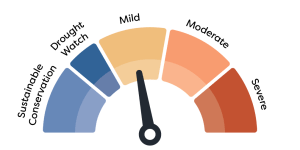
Longmont’s drought response scale has five stages, from Sustainable Conservation to Severe. Each stage triggers different water use guidelines.
The City is Acting First
City crews are already reducing water use at parks, greenways, golf courses, and municipal buildings, focusing their watering on the most-used spaces and dialing it back or turning it off elsewhere.
Some areas across the city will still be watered regularly. Mature trees, athletic fields, and the most visited community parks need consistent water to stay healthy. Letting these areas go unwatered costs the community more in the long run, both to replace what’s lost and to repair what gets damaged. The City is cutting back where it can without sacrificing the public spaces and assets residents count on every day.
What This Means for You
The City is asking residents to voluntarily cut water use by about 10%. There are no fines or mandatory watering rules at this level. A few small habits add up quickly:
- Water no more than three times per week, between 6 pm and 10 am. Hand water trees and sensitive plants.
- Turn off the tap when you’re not actively using it. Run full loads in your dishwasher and washing machine.
- Check for leaks and keep an eye on your monthly bill for unexpected spikes that could signal a problem.
“Increased conservation now is the most effective tool we have to make our communities more resilient for future dry years,” said Hope Bartlett, City of Longmont Water Conservation Specialist. “Outdoor water use makes up a large share of summer demand, so reducing lawn and landscape watering can make the biggest difference.”
Why Now, and Why Mild?
Colorado is dry, and much of the state is in serious drought. So why is Longmont calling this mild?
Longmont plans for water differently than other places across the state. The City prepares for a 1-in-100-year drought lasting about seven years, which is a longer, more intense scenario than many water providers plan for. It means Longmont starts responding earlier and more gradually, building in a cushion before dry years arrive instead of reacting hard once they do. When other communities are in a heavier response, Longmont’s response can look quieter because a lot of that work has happened ahead of time.
The City is one of the largest water users in Longmont. Cutting City operations by 10% adds up to real savings before residents are asked to do anything mandatory. Past droughts have shown that voluntary requests paired with City action work better than requiring community cutbacks.
Water Resources staff will keep watching conditions through the summer. The next four months typically see the highest water use of the year, and if conditions worsen, the City can increase its response. Likewise, if conditions improve, the City can step back.
How Longmont Plans for Dry Years
Although our City isn’t immune to dry conditions, Longmont has been planning for dry years for nearly 150 years. The City approaches drought conditions through long-term planning, reliable infrastructure, and a strong, diverse water portfolio supported by reservoirs, treatment facilities, and efficient delivery systems. Collaboration with Northern Water for trans-basin supplies bolsters the City’s ability to navigate dry years.
The community’s conservation efforts have kept our water system reliable. Together, Longmont uses less water per person today than it did a decade ago even as our population continues to grow, and that’s a big reason why the City can take a measured approach this year.