Climate Action & Resilience
Resilience
What does it mean to be a resilient community?
A resilient community is prepared to respond to natural disasters and other significant events. It has the resources and ability to adapt, recover, and become stronger in the face of challenges.
How does climate action relate to resiliency?
Climate action includes both mitigation and adaptation to address the impacts of climate change.
-
-
- Mitigation means taking actions that reduce greenhouse gas emissions and our impact on the environment.
- Adaptation means preparing Longmont for changing climate conditions and reducing the risks and impacts they may bring.
-
Sustainability, climate action, and resiliency help Longmont reduce and mitigate its contribution to climate change. It also helps Longmont adapt to the changing climate, which makes our community more resilient to disruptive events.
Resilience
Is a core tenet of both the Sustainability Plan and Envision Longmont.
Longmont is the first United Nations Resilience Hub in the US
In 2025, Longmont received the highest level of recognition from the United Nations Making Cities Resilient 2030 program.
Climate Action Recommendations Report
The Climate Action Recommendations Report was developed to complement the Sustainability Plan and accelerate Longmont’s progress toward a more resilient and equitable future. The report focuses on the seven topic areas listed below and provides recommendations for new programs and projects, the expansion of existing initiatives, and process-oriented strategies to embed equity throughout climate action efforts.
Milestones in Climate Action & Resilience
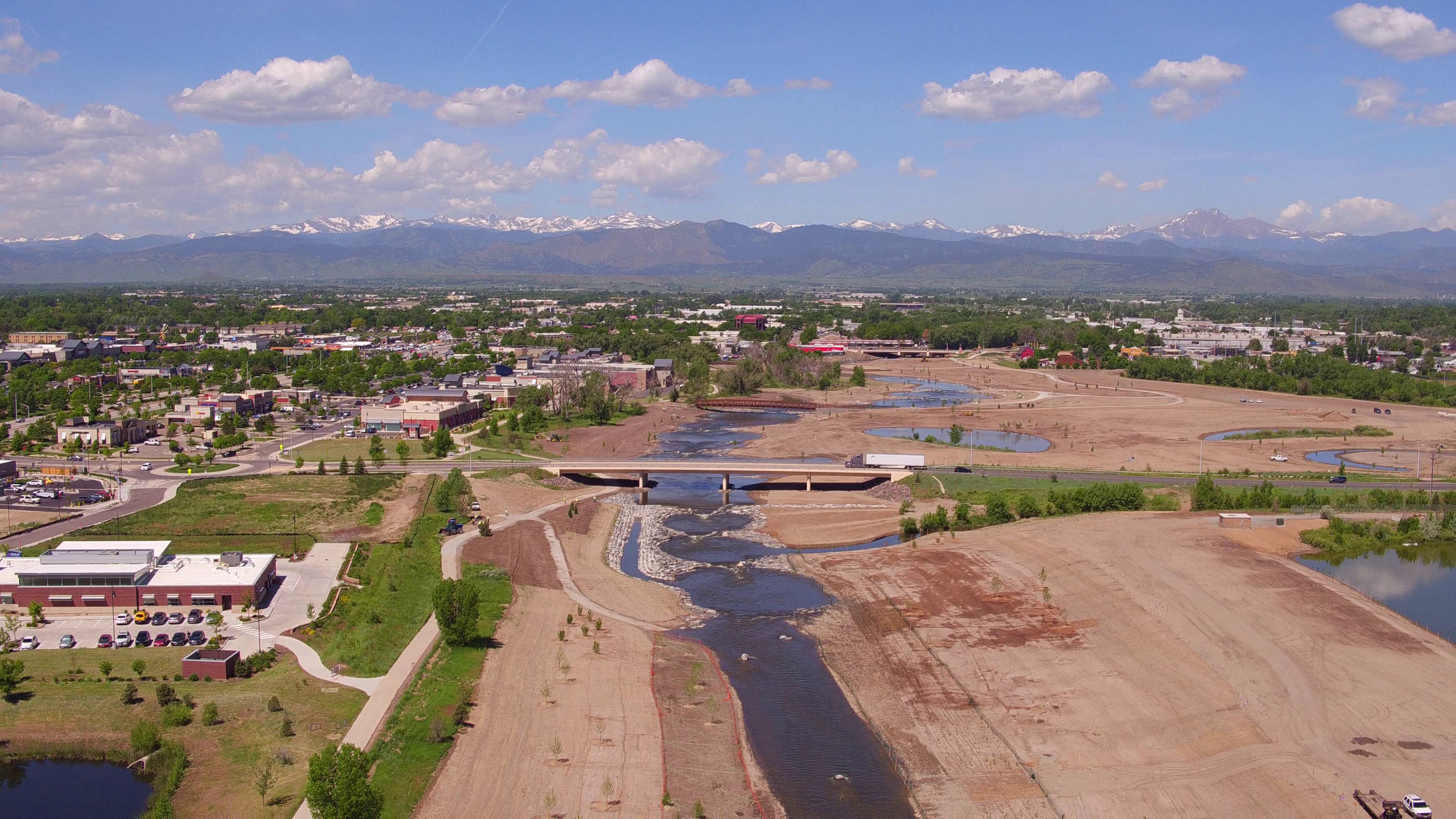
A major flood event in September 2013 severely impacted Longmont, particularly along St. Vrain Creek. A flood of this magnitude had not occurred in Longmont since 1894, reminding the community that the risk of major flooding is real and ongoing.
The Resilient St. Vrain project is a restoration and revitalization effort along St. Vrain Creek designed to help Longmont rebuild smarter by mitigating against future floods. This will better protect people, property, and the environment.
Resiliency for All / Resiliencia Para Todos was a community engagement project focused on ensuring that all residents have the information, resources, and connections they need to prepare for future flooding and other disruptive events. The project identified barriers to safety and resiliency and helped build connections among vulnerable members of the Latino community, local resources, the City of Longmont, and Boulder County.
On June 1, 2017, Longmont Mayor Dennis Coombs joined Climate Mayors in responding to President Trump’s announcement that the United States would withdraw from the Paris Climate Agreement. The statement expressed the participating mayors’ commitment to supporting the goals of the Paris Agreement through local climate action.
More than 400 mayors, representing approximately 70 million Americans, signed the statement, committing to adopt, honor, and uphold the goals of the Paris Agreement.
In 2018, Longmont completed its first citywide greenhouse gas inventory to establish a baseline for measuring emissions and tracking progress over time. Based on the inventory results, the City identified and prioritized strategies to reduce greenhouse gas emissions, including transitioning sanitation trucks to renewable natural gas.
When evaluating these strategies, Longmont considered their potential impacts on the community, affordability, implementation timelines, and advances in technology. The City also committed to ensuring that the transition to a clean energy economy advances equity, expands access to clean energy, and addresses environmental justice.
Longmont updates its greenhouse gas inventory every three years. Explore the most recent 2024 Greenhouse Gas Inventory summary or visit the Longmont Indicators greenhouse gas scenario tool to learn more about historical emissions and projected future emissions.
On October 8, 2019, the Longmont City Council unanimously passed a resolution declaring a climate emergency and expressing the City’s intent to take immediate and accelerated action to address the climate crisis.
The resolution was initiated by Longmont residents and formally adopted by the City Council through a unanimous vote.
In 2020, Longmont City Council convened a Climate Action Task Force made up of City staff, subject matter experts, community partners, and residents. The Task Force included community members who are particularly vulnerable to the impacts of climate change.
The group discussed actions Longmont could take to move toward a carbon-free, sustainable community. In December 2020, City Council approved the Task Force’s Climate Action Recommendations Report, which outlined recommended strategies and actions for addressing climate change in Longmont.
Contact Us
Office of Sustainability
303-774-3755