Police Drones and Unmanned Aerial System
The History of Law Enforcement Drones in Longmont
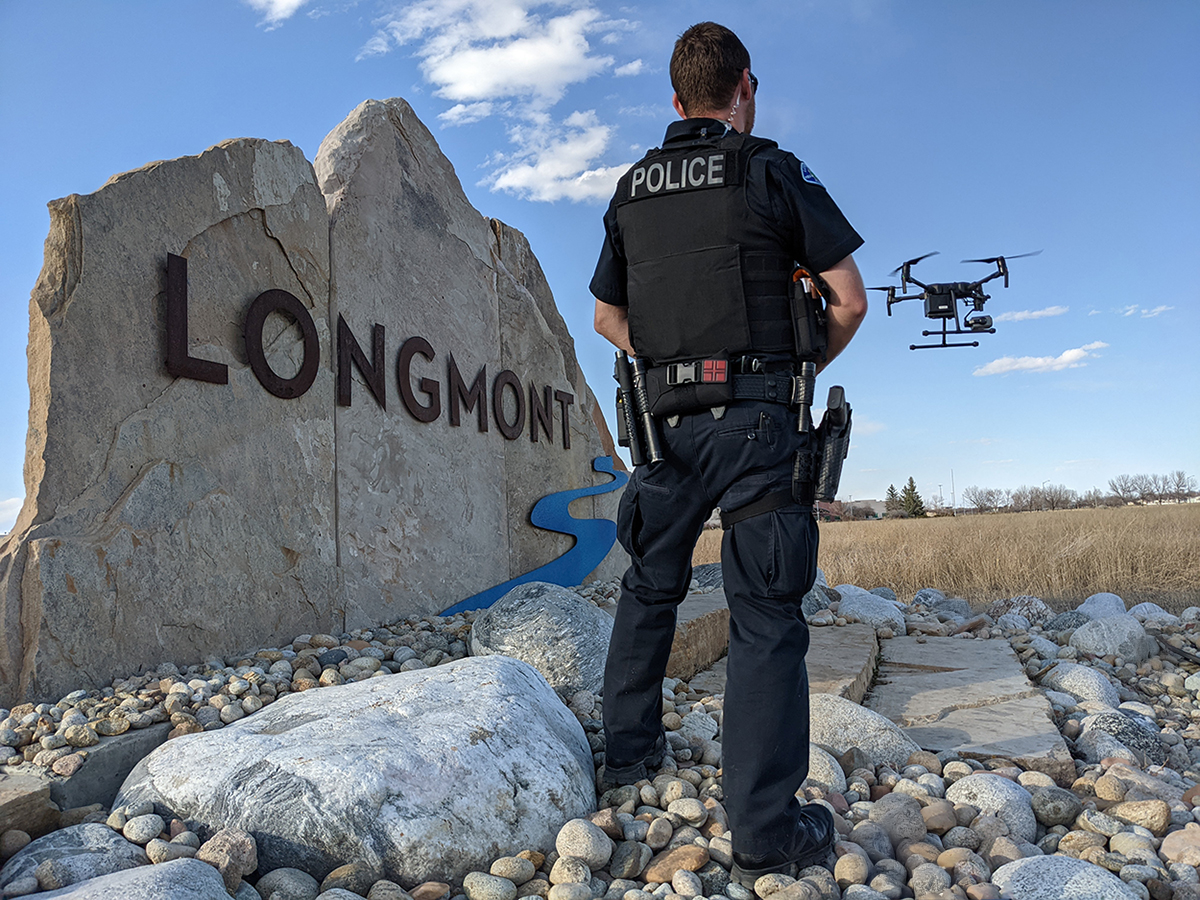
Since 2018, the Longmont Police Department has operated a program that uses drones on high-priority calls for service. This means that as certain calls come in, specially trained officers are dispatched to the scene to assist with a drone or UAS (unmanned aerial system). This model has proven successful and has supported hundreds of investigations. As a result, the Longmont Department of Public Safety remains committed to exploring new and innovative methods to improve public safety for the community, with this technology playing a key role in that effort.
Pilot Program
The Longmont Police Department is adopting a strategy to deliver essential law enforcement services more efficiently and effectively. The proposed pilot DFR (Drone as First Responder) program will shift drone use from a case-by-case basis to direct response for calls for service. The program enhances our resources by enabling DFR pilots to respond to any call within minutes across the city. This quick arrival allows them to verify the nature of a service call and resolve some calls without an officer responding.
The Drone as First Responder (DFR) operator program will be deployed to most calls for service to provide support. It provides us with real-time video during calls, allowing staff to locate, report, and track suspects and vehicles involved in ongoing incidents. This information helps guide first responders both at the scene and afterward.
DFR deployments may include, but are not limited to:
- Individuals barricaded in a property
- Active killing incidents
- Building or open space fires
- Arrest of armed and dangerous fleeing subjects
- Vehicular crashes
- Disaster response
- Missing persons searches
- Search and rescue operations
- Hazardous materials incidents
- Suspected explosive devices
- Special event monitoring
- Trespassing and quality of life crimes
Privacy and Transparency
We are committed to maintaining public trust through full transparency:
- All publicly releasable drone flight information will be available within 24 hours through our public transparency portals following the completion of the mission.
- When responding to calls for service, the drone’s camera is focused on the scene or people/vehicles involved, protecting privacy while ensuring accountability.
- We are in full adherence to Federal Aviation Administration (FAA) regulations.
- Department policies prohibit drone operators from intentionally recording or transmitting images of any location where a person would have a reasonable expectation of privacy, except where authorized by a warrant issued by a judge or in emergency situations.
- Complaints regarding a drone can be made by emailing regarding public safety drones or calling 303-651-8424.
Drones as First Responders
Unmanned aircraft are dispatched similarly to how officers or other first responders are deployed on patrol, often reaching the scene within minutes.
Once our 911 Communications Center airs a call, a remote operator can deploy the drone to the incident site. The remote operator has control of the aircraft and its cameras and sensors using a keyboard and controller. This enables them to provide a live video feed and essential incident information to responding emergency personnel. After the situation is resolved, the remote operator directs the drone to return to the landing site, where they prepare for the next call.
The program aims to enhance community safety, improve incident response times, increase officer and firefighter safety, support better de-escalation outcomes, and serve as a valuable public safety resource.
The information relayed by the drone helps determine the best response to an incident, including identifying the necessary tools, tactics, and resources required to safely address the problem, often before first responders arrive at the scene.
The Importance of Community Engagement
Building strong community relationships is essential to the success of our unmanned aerial support (drone) program. We welcome public feedback and desire to engage with residents to ensure the program reflects community values and expectations.
FAQs
- Are there certifications required to operate this drone? The Team consists of highly trained operators, all of whom are public safety city employees, and they comply with FAA regulations.
- How big is this drone, and where does it fly from? Our program supports approximately 32 square miles. We operate one drone dock. The drone is approximately 30″ x 30″, weighs around 14 lbs, and launches from a docking station at the Safety and Justice Center.
- How fast do these drones travel and how long is the average flight time? These drones travel approximately 53 mph and can fly up to 55 minutes per battery charge.
- Who has access to video and photos, and how long is video retained? Videos and photos collected by Drones/UAS are stored for police investigations and later prosecutions. They are usually accessible only to police investigators for official purposes. Similar to other police records, these videos and photos may also be released under the same rules and restrictions as BWC videos and other evidence.
- Can the community view the department’s written policy on drones as well as associated documents? Of course, here are the documents we think the public may be interested in reviewing. However, if something isn’t posted, please reach out to us. Access the policy here.
- How close would a public safety drone get to my house? The drone operator will operate the drone in a safe and respectful manner to limit the potential for intrusion into one’s privacy.
Will there be special markings that would identify public safety drones? Not that would be able to be seen from the ground - Will the drones be armed? No
- How high and how low can the Unmanned Aerial Vehicles fly? The unmanned aerial vehicles can fly up to 400 feet under most circumstances, and the drone will not operate lower than 200 ft.
- Can these drones be used to assist with fireworks complaints? Possibly; that is a future use case that we are looking to develop.
Flight Data Dashboard
Flight data will be available soon.
Questions?
Longmont Public Safety staffs the drone program. Please email or call 303-651-8424 if you have additional questions.